


Introduction
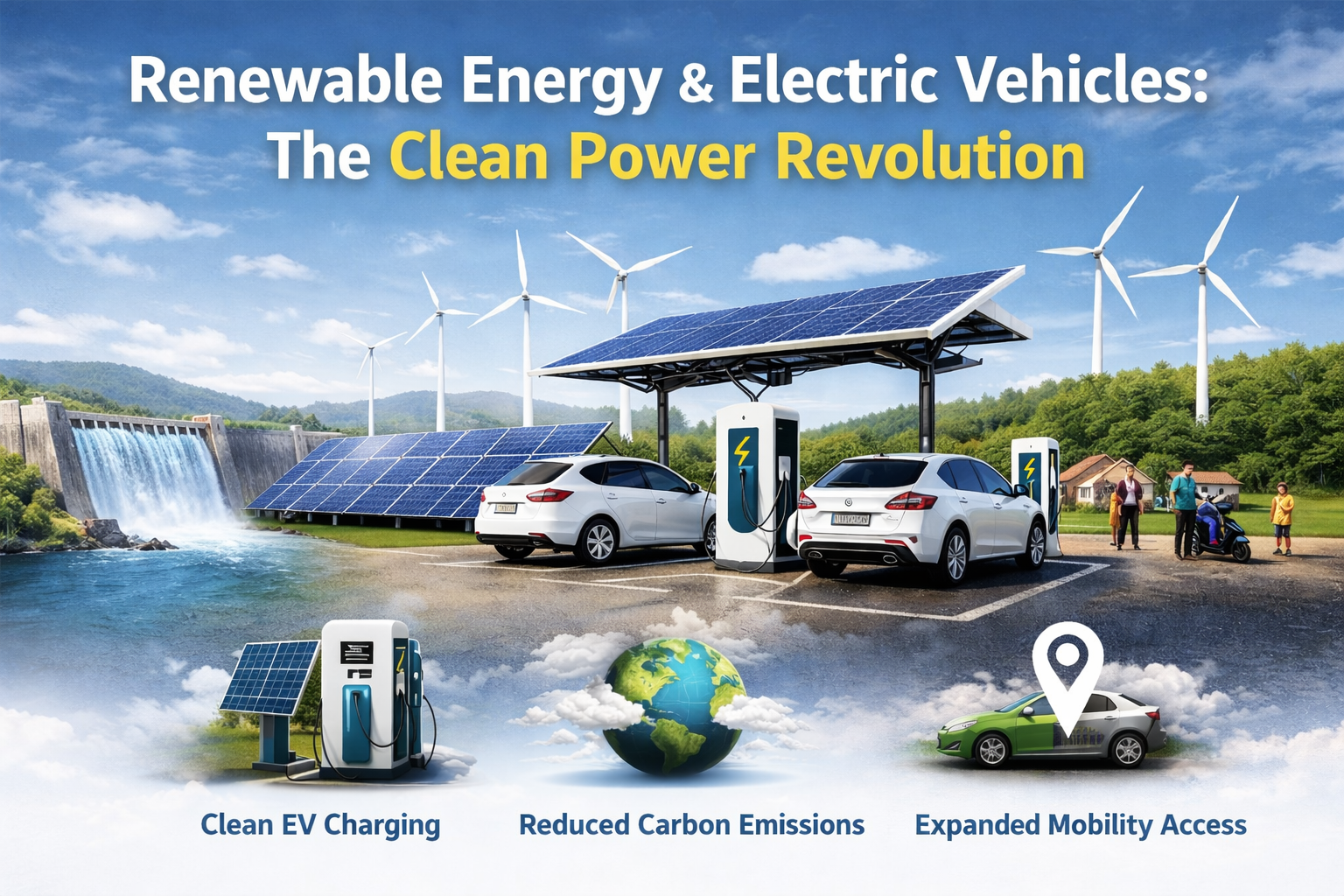
Electric vehicles (EVs) are often praised as the future of transportation — but they’re only as clean as the energy that powers them. Globally, the real impact of EVs depends on one key factor: how the electricity is generated.
If EVs are charged using fossil fuels, their environmental benefits shrink. But when renewable energy powers EV charging, the result is a truly low-carbon transportation system that can transform cities, economies, and communities worldwide.
For global insights on the transport transition, see the International Energy Agency’s transport overview.
(https://www.iea.org/topics/transport)
1. Solar-Powered Charging Stations: The Future of Clean Mobility
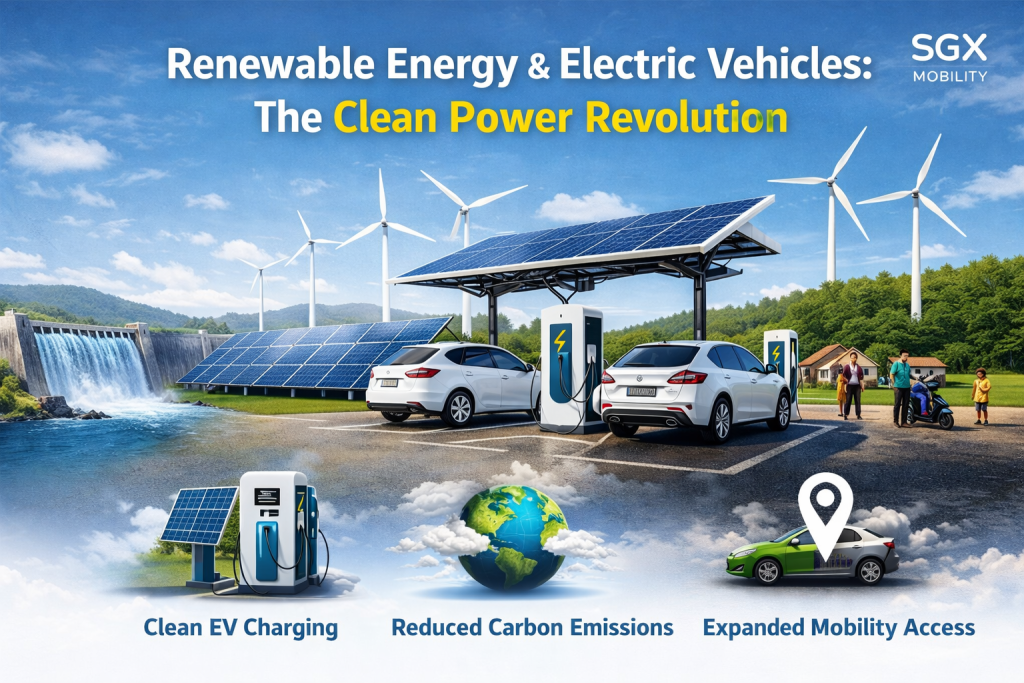
Solar-powered EV charging stations are more than just a green idea — they are a practical solution. In many regions, solar energy can provide reliable, low-cost electricity to charge vehicles, especially in areas with inconsistent grid power.
Why solar charging matters:
- Reduces dependence on fuel generators
- Lowers operating costs
- Improves charging reliability
- Supports off-grid mobility in remote areas
For more on renewable energy in transport, see the International Renewable Energy Agency (IRENA).
(https://www.irena.org/transport)
2. Wind, Hydro, and Renewable Grids: The Real Clean Energy Backbone
While solar is highly visible, other renewable sources like wind and hydro play a major role in powering EVs globally. Countries that build strong renewable grids create an ecosystem where EV adoption becomes truly sustainable and scalable.
For global renewable energy and climate action context, refer to the United Nations climate change page.
(https://www.un.org/en/climatechange)
3. Reduced Carbon Emissions: The True Measure of EV Success
The biggest benefit of EVs is not just cleaner air — it’s the reduction of carbon emissions across the entire transport system. When renewable energy powers EVs, we move closer to achieving global climate goals and reducing our dependency on fossil fuels.
For the latest climate science and emissions data, refer to the Intergovernmental Panel on Climate Change (IPCC).
(https://www.ipcc.ch)
4. Improved Energy Access and Mobility for Everyone
Renewable energy also enables charging infrastructure to reach underserved communities. This is especially important in regions with limited grid access, where clean energy can power mobility solutions and improve access to jobs, healthcare, and education.
For insights on EV and clean energy growth globally, see the World Economic Forum’s EV archive.
(https://www.weforum.org/agenda/archive/electric-vehicles/)
Conclusion
Renewable energy is the backbone of the global electric mobility revolution. EVs alone won’t solve climate change — but when paired with clean power, they become a powerful tool for building a sustainable, low-carbon future.
Join the conversation below 👇
Do you believe EVs are truly clean if the electricity comes from fossil fuels? Share your thoughts and experiences.