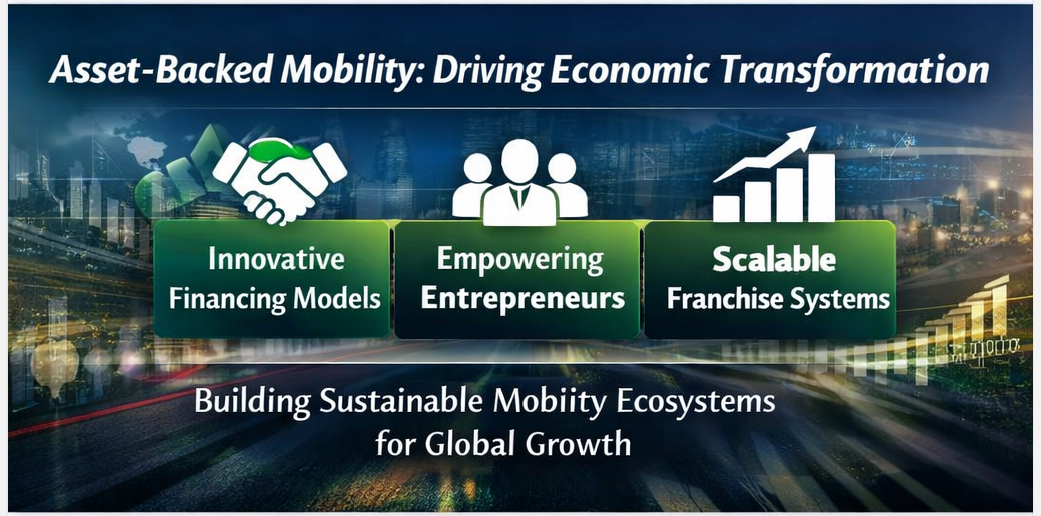


The Future of Asset-Backed Mobility: Reshaping Global Transport Through Structured Financing
Across both emerging and developed economies, the mobility industry is undergoing a structural shift.
Transportation is no longer just about vehicles — it is about financial architecture, access models, and scalable infrastructure systems.
At the center of this transformation is asset-backed mobility financing — a structured approach that turns vehicles into productive economic assets while expanding access, reducing entry barriers, and accelerating inclusive growth.
This shift is redefining how transport businesses are built, funded, and scaled worldwide.
From Ownership to Structured Access
For decades, mobility growth depended on individual ownership or informal leasing models. The result?
- High capital barriers
- Fragmented operations
- Poor asset tracking
- Limited scalability
Today, forward-thinking mobility companies are building structured systems that integrate:
- Asset financing
- Fleet management
- Risk mitigation frameworks
- Franchise expansion models
- Data-driven asset performance tracking
This evolution allows vehicles to operate not just as tools — but as income-generating financial instruments within a controlled ecosystem.
Why Asset-Backed Mobility Is Gaining Global Momentum
Several global forces are accelerating this model:
1. Urbanization & Transport Demand
Cities are expanding rapidly. Reliable transport is now a foundational economic driver, not a luxury.
2. Financial Inclusion Gaps
Millions of capable operators lack access to traditional credit systems. Structured mobility financing bridges this gap using asset-based underwriting.
3. Risk Management Through Structure
Modern models incorporate:
- GPS asset tracking
- Digital repayment systems
- Performance monitoring
- Tiered franchise frameworks
This reduces lender risk while empowering operators.
4. Scalable Franchise Systems
Mobility is becoming replicable. Structured franchise frameworks allow expansion into new cities and markets without compromising asset oversight.
The Economic Multiplier Effect
Well-structured mobility financing does more than move people.
It:
- Creates micro-entrepreneurs
- Generates employment
- Increases tax contributions
- Strengthens transport reliability
- Improves urban productivity
When vehicles are financed through structured systems rather than informal debt cycles, repayment success rates improve and asset sustainability increases.
This is not just transportation.
It is economic infrastructure engineering.
The Global Opportunity
From Southeast Asia to Sub-Saharan Africa to parts of Latin America, mobility infrastructure gaps represent multi-billion-dollar opportunities.
However, the winning models are not simply ride-hailing platforms.
They are:
- Structured asset finance ecosystems
- Integrated franchise operations
- Risk-managed fleet systems
- Data-driven performance models
The next phase of mobility growth belongs to companies that understand finance, operations, and infrastructure — not just vehicles.
What the Future Looks Like
The next 5–10 years will likely see:
- Hybrid mobility finance models
- Institutional investment in transport fleets
- AI-driven asset risk scoring
- Integrated insurance + financing products
- Cross-border mobility franchise expansion
Mobility will increasingly resemble a structured financial sector — not just a logistics one.
Conclusion: Mobility as Infrastructure, Not Just Transportation
The conversation is shifting.
The question is no longer:
“How do we get more vehicles on the road?”
The real question is:
“How do we build sustainable, structured mobility ecosystems that create economic value at scale?”
Asset-backed mobility financing is answering that question globally.
And the markets that implement it responsibly will define the next era of transport economics.
wish you best and best